
Who Really Pays for Tariffs?
Economic Impact on American Consumers

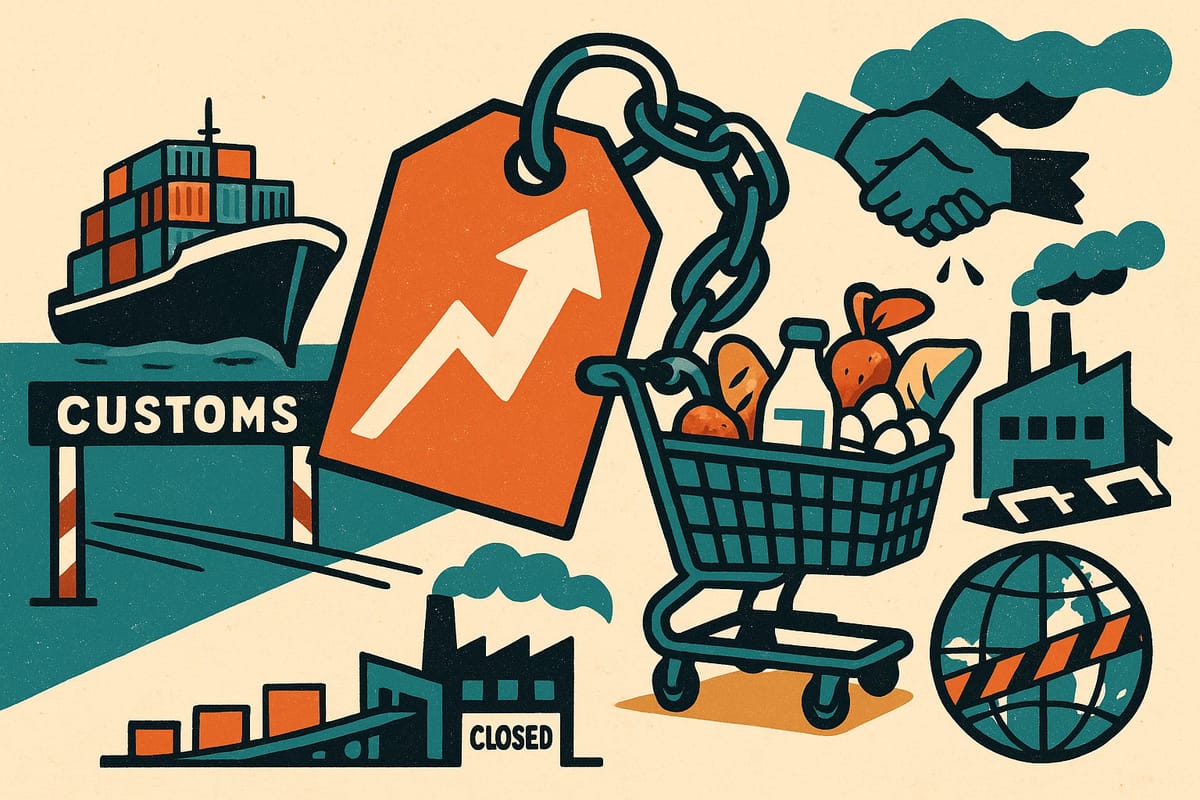
When tariffs are imposed on imported goods, a fundamental question arises: who actually bears the cost? Despite common misconceptions, economic evidence consistently shows that American consumers and businesses—not foreign exporters—predominantly pay for tariffs through higher prices. Understanding this mechanism is crucial for evaluating trade policy and its real-world impacts on household budgets.
Tariffs function as taxes on imported goods, collected at the point of entry into the United States. When a foreign company ships products to America, the tariff isn't paid by that foreign company directly. Instead, the American importer—the U.S. company bringing goods into the country—pays the tariff to U.S. Customs and Border Protection. This payment occurs before the goods can clear customs and enter the American marketplace.
Consider a practical example: A U.S. retailer imports washing machines from South Korea. If there's a 20% tariff on washing machines, and the retailer imports $1 million worth of appliances, they must pay $200,000 to the U.S. government before those products can leave the port. The South Korean manufacturer receives their original price; the American importer pays the additional tariff cost.
Once importers pay tariffs, they face a critical business decision: absorb the cost and reduce profit margins, or pass the cost to consumers through higher prices. Economic research demonstrates that businesses typically pass most tariff costs to consumers. The extent of this "pass-through" varies by industry, market competition, and product type, but studies consistently find that consumer prices rise significantly following tariff implementation.
The 2018-2019 trade war provides compelling evidence. Washing machine prices increased by approximately 12% after tariffs were imposed, according to research from the University of Chicago and the Federal Reserve. Similarly, the Peterson Institute for International Economics found that tariffs on Chinese goods resulted in price increases that cost the average American household between $600 and $1,200 annually.
While consumers bear much of the tariff burden through higher prices, the impact isn't uniformly distributed. Several groups share the economic cost:
American importers and distributors often absorb some costs to remain competitive, reducing their profit margins. This squeeze can lead to reduced business investment, lower wage growth, or job cuts in import-dependent industries.
Domestic producers of competing goods may benefit initially from reduced foreign competition, potentially raising their prices as well. However, if they rely on imported materials or components subject to tariffs, their production costs also increase.
Foreign exporters sometimes reduce their prices slightly to maintain market share, but research shows this reduction typically accounts for a small fraction of the tariff rate. The National Bureau of Economic Research found that foreign exporters absorbed less than 10% of tariff costs during recent trade conflicts.
Tariffs disproportionately affect lower-income households, functioning as a regressive tax. Since lower-income families spend a higher percentage of their income on goods (rather than services), and many everyday items from clothing to electronics face tariffs, these households feel the impact more acutely.
A family earning $30,000 annually might spend 30% of their income on tariff-affected goods, while a family earning $200,000 might spend only 10% on such items. When prices rise due to tariffs, the lower-income family experiences a greater relative burden, even if both families pay the same absolute price increase.
Beyond direct price increases, tariffs trigger cascading economic effects that further impact American consumers and businesses:
Supply chain disruptions occur as companies scramble to find alternative suppliers or reorganize production. These adjustments cost money and time, expenses ultimately reflected in consumer prices.
Retaliatory tariffs from trading partners harm American exporters. When the U.S. imposes tariffs, other countries often respond with their own tariffs on American goods, hurting U.S. farmers, manufacturers, and workers in export-oriented industries.
Economic efficiency declines as tariffs distort market signals. Resources shift from their most productive uses to politically protected industries, reducing overall economic output and innovation. This inefficiency translates to slower economic growth and fewer opportunities for American workers.
Currency effects can partially offset tariff impacts. Tariffs may strengthen the dollar as imports decline, making remaining imports slightly cheaper. However, this effect typically doesn't fully compensate for the direct price increases from tariffs.
Economic studies across different time periods and countries consistently confirm that domestic consumers bear most tariff costs. Research on the Smoot-Hawley Tariff Act of 1930, which many economists blame for deepening the Great Depression, showed severe negative impacts on American consumers and businesses.
More recent analysis provides similar conclusions. A 2019 study by economists at Columbia, Princeton, and the Federal Reserve Bank of New York found that American consumers and firms bore approximately 100% of tariff costs through higher prices and reduced product variety. The Congressional Budget Office estimated that tariffs imposed between 2018 and 2020 reduced average real household income by $1,277 in 2020.
Despite clear economic evidence, political rhetoric often suggests foreign countries pay tariffs. This framing persists because tariffs can appear to support domestic industries and workers, making them politically appealing. The immediate, visible beneficiaries—protected domestic producers—have strong incentives to lobby for tariffs, while the costs spread diffusely across millions of consumers are less politically salient.
Understanding who actually pays for tariffs requires distinguishing between the legal incidence (who writes the check) and economic incidence (who bears the real cost). While foreign exporters don't directly pay tariffs to the U.S. government, claiming they bear no cost oversimplifies the complex economic dynamics at play.
The economic consensus is clear: American consumers and businesses pay for tariffs primarily through higher prices, reduced product variety, and slower economic growth. While tariffs may achieve certain policy objectives—protecting specific industries, pressuring trading partners, or raising government revenue—these benefits come at a significant cost to American households.
As policymakers debate trade policy, recognizing the true distribution of tariff burdens is essential. Tariffs are not free money extracted from foreign countries; they are taxes that ultimately come from American pockets. Whether these costs are justified depends on one's policy priorities, but the economic reality of who pays should inform any honest assessment of tariff policy.
The debate over trade policy will undoubtedly continue, but understanding the fundamental economics of tariffs helps citizens and policymakers make informed decisions. When evaluating proposed tariffs, the key question isn't whether foreign countries will pay—they won't—but whether the policy benefits justify the costs that American consumers and businesses will bear.