
The Oil Coup
How Resource Wars Shape American Foreign Policy

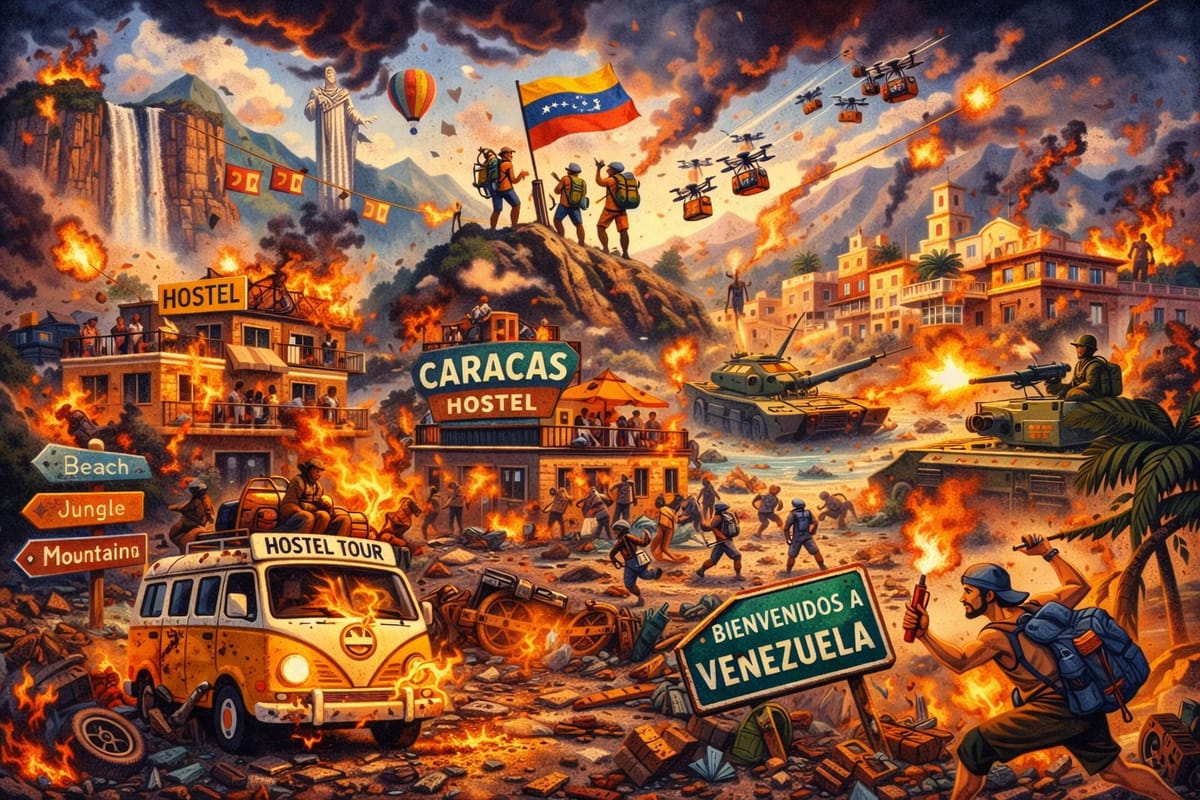
The recent dramatic escalation in U.S.-Venezuela relations represents the culmination of a decades-long campaign rooted not in humanitarian concerns or democratic principles, but in the ruthless pursuit of control over the world’s largest proven oil reserves. Venezuela sits atop approximately 303 billion barrels of crude oil—roughly 18% of global proven reserves—a geological fortune that has made it a target for foreign intervention since the early 20th century. Understanding the current crisis requires examining the systematic pattern of American interventionism in Latin America, the specific history of U.S. involvement in Venezuelan oil, and the broader economic and geopolitical forces that drive policy decisions in Washington.
The scale of Venezuela’s oil wealth cannot be overstated. With reserves exceeding those of Saudi Arabia, Iran, and Iraq combined, Venezuela possesses enough crude oil to fundamentally reshape global energy markets if properly developed. The Orinoco Belt alone contains an estimated 900-1,400 billion barrels of heavy crude, much of it technically recoverable with modern extraction methods. This represents not just an energy source, but a geopolitical prize that could determine the balance of power in the Western Hemisphere for generations.
Yet despite these vast resources, Venezuela’s oil production has collapsed from over 3.5 million barrels per day in the 1970s to approximately 1 million barrels per day today. This dramatic decline stems from a complex interplay of factors including economic mismanagement, infrastructure decay, and—crucially—the devastating impact of U.S. economic sanctions that have systematically strangled the Venezuelan economy since 2005. The result is a nation sitting atop unimaginable wealth while its population suffers from hyperinflation, shortages, and emigration on a massive scale.
The current Venezuelan crisis fits seamlessly into a broader pattern of American interventionism that spans over two centuries. Since the Monroe Doctrine of 1823, the United States has claimed the Western Hemisphere as its exclusive sphere of influence, intervening militarily in Latin American nations over 400 times since 1776. Half of these interventions have occurred since 1950, revealing an accelerating pattern of interference that consistently coincides with the presence of valuable natural resources.
The parallels to previous interventions are striking and instructive. In 1953, the CIA orchestrated the overthrow of democratically elected Iranian Prime Minister Mohammad Mossadegh after he nationalized Iran’s oil industry, threatening Anglo-American Petroleum Company profits. The following year, the CIA backed the coup against Guatemalan President Jacobo Árbenz, whose land reforms threatened the United Fruit Company’s vast holdings. In Chile, the U.S. supported the 1973 coup against Salvador Allende after he moved to nationalize copper mines and other extractive industries.
More recently, the 2003 invasion of Iraq and the 2011 intervention in Libya both targeted nations with significant oil reserves, ostensibly for humanitarian or security reasons but ultimately resulting in Western access to energy resources and the installation of compliant governments. The pattern is clear: when resource-rich nations assert sovereignty over their natural wealth or challenge American economic interests, they become targets for destabilization and regime change.
This historical context is essential for understanding the Venezuelan crisis. The escalation of U.S. pressure on Venezuela directly correlates with Hugo Chávez’s election in 1998 and his subsequent nationalization of oil assets and land redistribution programs. The timing is not coincidental—it represents the latest chapter in a centuries-old struggle over who controls Latin America’s natural resources.
American involvement in Venezuelan oil dates back to the 1920s, shortly after significant reserves were discovered in the Maracaibo Basin. Large-scale land acquisition by foreign companies for oil prospecting began in 1912, with major American corporations quickly establishing dominance over the emerging industry. By the 1920s and 1930s, companies like Standard Oil and Gulf Oil had secured extensive concessions, effectively controlling Venezuelan oil production and export.
This early period established the template for economic extraction that would persist for decades. Foreign oil companies operated with minimal taxation, weak environmental oversight, and generous profit-sharing agreements that heavily favored American and European investors over Venezuelan development. The profits from oil flowed primarily to foreign shareholders while Venezuela remained largely impoverished despite sitting atop enormous wealth.
The relationship began to shift in 1943 when Venezuela renegotiated oil contracts to establish a 50-50 profit-sharing arrangement with foreign companies. This marked the beginning of Venezuelan efforts to capture more value from their natural resources, a trend that would continue through the 1970s. In 1976, President Carlos Andrés Pérez nationalized the oil industry, creating Petróleos de Venezuela (PDVSA) to manage the country’s petroleum resources.
The nationalization represented a fundamental challenge to the established order of resource extraction. For the first time, Venezuela claimed full sovereignty over its oil wealth, cutting out American intermediaries and redirecting profits toward domestic development. While initially successful, this assertion of independence set the stage for decades of tension with Washington, which viewed Venezuelan energy independence as a threat to American economic interests and regional influence.
During the 1980s and 1990s, economic pressure from international lending institutions and falling oil prices forced Venezuela to gradually reopen its oil sector to foreign investment. American companies returned, though under less favorable terms than they had enjoyed in the pre-nationalization era. This period of neoliberal adjustment created the conditions for popular discontent that would eventually bring Hugo Chávez to power.
Hugo Chávez’s election in 1998 marked a turning point in Venezuelan history and U.S.-Venezuela relations. Chávez campaigned on a platform of using oil revenues to fund social programs, reduce inequality, and assert Venezuelan independence from American influence. His “Bolivarian Revolution” explicitly challenged the neoliberal economic model and sought to redirect oil wealth toward domestic development rather than foreign profit.
The threat to American interests was immediately apparent. Chávez moved quickly to increase state control over oil resources, raise taxes on foreign companies, and use oil revenues to fund healthcare, education, and housing programs for Venezuela’s poor majority. He also began building alliances with other oil-producing nations and sought to challenge U.S. dominance in global energy markets through organizations like OPEC and initiatives like PetroCaribe.
The U.S. response was swift and multifaceted. In 2002, the CIA supported a failed coup attempt against Chávez, providing funding and logistical support to military plotters and opposition groups. When the coup collapsed due to popular resistance and military loyalty to the elected government, the United States shifted to a strategy of economic pressure and political isolation.
Throughout the 2000s, the U.S. imposed targeted sanctions on Venezuelan officials and began building a legal and political framework for broader economic warfare. The Obama administration continued this approach, gradually expanding sanctions while supporting opposition groups and promoting the narrative of Venezuelan authoritarianism. By the time Donald Trump took office in 2017, the groundwork was laid for a comprehensive assault on the Venezuelan economy.
The modern sanctions regime against Venezuela represents one of the most comprehensive economic warfare campaigns in modern history. Beginning with targeted sanctions in 2005 and expanding dramatically under the Trump administration, these measures have systematically destroyed Venezuela’s ability to access international financial markets, purchase essential equipment, and export oil—the foundation of its economy.
The 2017-2019 period saw a dramatic escalation in sanctions severity. Executive Order 13808 prohibited Venezuelan access to U.S. financial markets, while subsequent orders banned transactions with Venezuelan digital currency and prohibited the purchase of Venezuelan debt. Most devastatingly, the Trump administration imposed comprehensive sanctions on PDVSA in January 2019, effectively cutting Venezuela off from its primary source of foreign exchange earnings.
The impact of these sanctions has been catastrophic. According to the Government Accountability Office, sanctions have “likely contributed to Venezuela’s economic decline” by making it impossible for the country to sell oil at market prices or access international financial systems. Venezuela’s oil exports to the United States, which averaged over 800,000 barrels per day in 2013, fell to just 120,000 barrels per day by 2023. The country now relies heavily on discounted sales to China and other nations willing to navigate the sanctions regime.
The human cost has been enormous. The UN estimates that over 7 million Venezuelans have fled their country since 2015, creating the largest refugee crisis in the Western Hemisphere. Hyperinflation reached over 1,000,000% at its peak, making basic necessities unaffordable for ordinary citizens. Healthcare systems collapsed, infant mortality soared, and life expectancy declined—all direct consequences of the economic strangulation imposed by sanctions.
Yet from Washington’s perspective, the sanctions have been remarkably successful at their true objective: weakening Venezuelan state capacity and creating conditions for regime change. By destroying Venezuela’s ability to generate revenue from oil exports, the sanctions have systematically undermined the government’s ability to fund social programs, maintain infrastructure, or resist external pressure.
Beyond the immediate goal of regime change, the Venezuelan crisis reflects broader geopolitical competition between the United States and rising global powers. Venezuela’s alignment with China, Russia, and Iran has created what Washington views as an intolerable challenge to American hegemony in the Western Hemisphere.
China has emerged as Venezuela’s most important economic partner, providing over $60 billion in loans since 2007 in exchange for guaranteed oil deliveries. This relationship has allowed Venezuela to partially circumvent U.S. sanctions while providing China with access to energy resources and a strategic foothold in the Americas. Chinese companies have also invested heavily in Venezuelan infrastructure, mining, and telecommunications, creating deep economic ties that challenge traditional American influence.
Russia has provided military advisers, weapons systems, and diplomatic support to Venezuela, viewing the country as a strategic ally in its global competition with the United States. Russian oil companies have also invested in Venezuelan energy projects, further complicating American efforts to isolate the country. The presence of Russian military personnel and equipment in Venezuela represents a direct challenge to the Monroe Doctrine’s assertion of exclusive American influence in the hemisphere.
Iran has developed extensive economic and technological cooperation with Venezuela, sharing expertise in oil refining, petrochemicals, and sanctions evasion. The two countries have collaborated on developing alternative financial systems and trade mechanisms that bypass U.S.-dominated institutions. This partnership has allowed both nations to reduce their isolation and maintain economic activity despite comprehensive American sanctions.
From Washington’s perspective, these relationships represent an existential threat to American dominance in the region. The establishment of a “axis of resistance” including Venezuela, Cuba, Nicaragua, and Bolivia, supported by China, Russia, and Iran, challenges the fundamental assumptions of American foreign policy. The Venezuelan crisis thus becomes not just about oil or regime change, but about maintaining American hegemony in a multipolar world.
The role of American oil companies in shaping Venezuela policy cannot be understated. Major corporations including ExxonMobil, ConocoPhillips, and Chevron have lost billions of dollars in Venezuelan assets through nationalization and contract renegotiation under Chávez and Maduro. These companies have consistently lobbied for aggressive action against Venezuela and have played a key role in shaping sanctions policy.
ExxonMobil alone claims over $10 billion in compensation for assets nationalized by the Venezuelan government. The company has pursued this claim through international arbitration courts and has consistently advocated for maximum pressure on Venezuela. ConocoPhillips has similarly sought billions in compensation and has supported sanctions as a means of pressuring Venezuela to pay these claims.
The influence of these corporations extends far beyond direct lobbying. Oil industry executives move regularly between corporate positions and government roles, creating a revolving door that ensures corporate interests are represented in policy decisions. Former ExxonMobil CEO Rex Tillerson served as Secretary of State under Trump and played a key role in escalating sanctions against Venezuela. Current and former oil executives occupy numerous positions throughout the federal bureaucracy, particularly in agencies responsible for energy and foreign policy.
The potential for renewed corporate access to Venezuelan oil represents an enormous financial incentive for continued pressure on the current government. With global oil reserves becoming increasingly concentrated in nations outside direct American influence, Venezuela’s resources become even more strategically valuable. The prospect of accessing 300 billion barrels of oil reserves under favorable investment terms provides powerful motivation for both corporate and government actors.
This corporate influence operates through multiple channels: direct political contributions, lobbying expenditures, think tank funding, and the promise of lucrative private sector positions for government officials. The result is a policy environment where corporate interests in Venezuelan oil become inseparable from American “national interests,” despite the devastating consequences for Venezuelan civilians and regional stability.
The evolution of justifications for intervention in Venezuela reveals the sophisticated mechanisms through which economic interests are translated into moral and legal imperatives. The narrative has shifted from initial concerns about corruption and authoritarianism to increasingly dire warnings about drug trafficking, terrorism, and threats to regional security.
The designation of Venezuelan officials as “narco-terrorists” represents a particularly cynical manipulation of legitimate security concerns to justify economic warfare. While corruption and drug trafficking certainly exist in Venezuela, as they do throughout Latin America, the scale and focus of American accusations far exceed the available evidence. The transformation of a political and economic conflict into a “war on drugs” provides legal cover for actions that would otherwise be recognized as economic imperialism.
The invocation of humanitarian concerns follows a similar pattern. While Venezuelan civilians have undoubtedly suffered under economic collapse and political instability, the primary cause of this suffering has been the sanctions regime itself. The creation of a humanitarian crisis through economic warfare, followed by calls for intervention to address that crisis, represents a particularly sophisticated form of imperial manipulation.
The legal framework surrounding sanctions and intervention has been carefully constructed to provide domestic political cover while maintaining plausible deniability internationally. Executive orders cite national emergencies and security threats, while congressional authorization remains deliberately vague to allow maximum executive flexibility. The result is a legal architecture that can justify virtually any level of intervention while maintaining the appearance of constitutional and democratic oversight.
International law provides little effective constraint on American action. While the United Nations and other international bodies may condemn sanctions and intervention, the United States possesses sufficient power to ignore these constraints with minimal consequences. The weaponization of the dollar-dominated financial system provides mechanisms for economic warfare that operate outside traditional frameworks of international law.
The role of American media in shaping public understanding of the Venezuelan crisis demonstrates the sophisticated propaganda mechanisms that support imperial intervention. Coverage consistently focuses on the failures and authoritarianism of the Venezuelan government while minimizing or ignoring the role of sanctions in creating the conditions being reported.
The narrative arc is predictable and familiar: an authoritarian dictator oppresses his people while enriching himself through corruption and drug trafficking. International intervention becomes necessary to protect human rights and restore democracy. The economic interests driving intervention are either ignored entirely or presented as beneficial side effects of humanitarian action.
This framing systematically excludes crucial context about American intervention in Latin America, the history of U.S.-Venezuela relations, or the documented impact of sanctions on civilian populations. Venezuelan perspectives, particularly those supporting the government or criticizing American intervention, are either absent or marginalized as propaganda. The result is a media environment that consistently supports escalating intervention while providing minimal space for dissenting voices or alternative analysis.
The concentration of media ownership in the hands of corporations with direct interests in Venezuelan resources further compounds these biases. Media conglomerates with oil industry investments or defense contractor relationships have clear financial incentives to support intervention. The revolving door between media, government, and corporate positions ensures that pro-intervention perspectives dominate coverage across supposedly independent news sources.
Social media has provided new mechanisms for narrative control, with platforms increasingly willing to suppress Venezuelan government accounts and amplify opposition voices. The designation of Venezuelan officials as terrorists or narco-traffickers provides legal justification for censorship that would be politically impossible under normal circumstances.
The Venezuelan crisis imposes enormous costs that extend far beyond the immediate human suffering in Venezuela itself. The regional refugee crisis has strained resources and created political tensions throughout Latin America. Colombia alone hosts over 2.8 million Venezuelan refugees, while Peru, Ecuador, and Brazil struggle to accommodate hundreds of thousands more.
The economic costs of this refugee crisis run into the tens of billions of dollars, creating fiscal pressures that undermine social programs and economic development throughout the region. These costs represent a direct subsidy to American intervention policy, as neighboring countries bear the burden of displacement created by U.S. sanctions.
The destruction of Venezuelan oil production capacity has broader implications for global energy markets and climate change. Venezuela’s heavy crude requires specialized refining capabilities that exist primarily in the United States and other Western countries. The sanctions regime has forced Venezuela to rely on less efficient refineries and transportation methods, increasing environmental damage while reducing overall production efficiency.
The weaponization of the U.S. financial system through sanctions has accelerated efforts by other nations to develop alternative payment and clearing mechanisms. China, Russia, and other powers are investing heavily in systems designed to circumvent dollar-based transactions, potentially undermining American financial hegemony in the long term. The overuse of sanctions as a foreign policy tool risks creating the very multipolar financial system that American policymakers seek to prevent.
Understanding the Venezuelan crisis requires engaging with perspectives from the Global South that challenge dominant American narratives. Many African, Asian, and Latin American nations view U.S. policy toward Venezuela as a continuation of colonial-era resource extraction, dressed in the language of democracy and human rights.
The Non-Aligned Movement, representing 120 nations, has consistently opposed sanctions against Venezuela and condemned what they view as economic imperialism. These nations point to their own experiences with structural adjustment programs, debt crises, and resource extraction to highlight the contradictions in American policy. They argue that the Venezuelan crisis represents not a failure of socialism, but the predictable result of economic warfare against a nation that dared to assert sovereignty over its resources.
Latin American perspectives are particularly relevant given the region’s long experience with American intervention. Despite significant political differences, most Latin American governments have opposed unilateral sanctions and called for negotiated solutions to the Venezuelan crisis. Even conservative governments that oppose Venezuelan socialism recognize the dangerous precedent set by economic warfare against sovereign nations.
Organizations like the Bolivarian Alliance for the Peoples of Our America (ALBA) and the Community of Latin American and Caribbean States (CELAC) have provided forums for alternative approaches to the crisis that emphasize sovereignty, non-intervention, and regional cooperation. These bodies have consistently called for dialogue and negotiation rather than sanctions and intervention.
African perspectives on the Venezuelan crisis are shaped by experiences with resource extraction during the colonial period and continuing economic subordination to Western powers. Many African leaders view Venezuelan resistance to American pressure as part of a broader struggle for economic independence and resource sovereignty that resonates with their own national experiences.
The Venezuelan crisis unfolds against the backdrop of global climate change and the urgent need to transition away from fossil fuels. This context adds layers of complexity to American policy that are rarely acknowledged in public discourse. The pursuit of Venezuelan oil resources conflicts directly with stated American commitments to climate action and renewable energy transition.
The irony is particularly stark given that much of Venezuelan oil consists of heavy crude that is among the most carbon-intensive forms of petroleum. Extracting and refining this oil produces significantly more greenhouse gas emissions than conventional crude, making it particularly problematic from a climate perspective. Yet American policy seeks to maximize production of precisely these resources while claiming leadership on climate issues.
The geopolitical implications of energy transition also shape Venezuelan policy in ways that receive little public attention. As global demand for oil potentially peaks over the coming decades, control over remaining reserves becomes increasingly important for maintaining geopolitical influence. Nations and corporations that control oil resources during the transition period will have significant leverage over the pace and terms of energy system change.
Venezuelan policy thus represents not just a struggle over current oil revenues, but a strategic positioning for the post-carbon future. The country’s vast renewable energy potential—including some of the world’s best solar and wind resources—adds another dimension to its strategic value. Control over Venezuela could provide access not only to oil during the transition period, but to the renewable resources that will power the post-carbon economy.
The environmental justice dimensions of the crisis are equally significant. The collapse of Venezuelan environmental protection capabilities due to sanctions has led to increased deforestation, mining pollution, and ecosystem degradation. The social and environmental costs of economic warfare are borne primarily by indigenous communities and the rural poor, while the benefits of any eventual resource access will flow to wealthy corporations and consumers in developed nations.
The Venezuelan crisis has contributed to a broader militarization of U.S. policy in Latin America that extends far beyond Venezuela itself. The expansion of American military presence in the Caribbean, the reactivation of military bases, and the designation of Latin American organizations as terrorist groups represent a significant escalation in regional military tensions.
The establishment of the Western Hemisphere Command in December 2025 signals a formal recognition of the region as a zone of military competition rather than diplomatic engagement. This militarization of hemispheric relations reverses decades of progress toward civilian governance and peaceful conflict resolution in Latin America.
Colombia has become a particular focus of American military assistance and basing rights, ostensibly to combat drug trafficking but clearly positioned to support potential operations against Venezuela. The integration of Colombian military forces with American command structures creates the potential for regional conflicts that could draw multiple nations into armed confrontation.
The designation of various Latin American groups as foreign terrorist organizations provides legal justification for military action throughout the region. This designation authority can be expanded and modified without congressional oversight, creating a flexible legal framework for intervention that bypasses traditional democratic controls.
The arms trade represents another dimension of regional militarization, with American weapons sales to Latin American governments reaching record levels during the Venezuelan crisis. These sales serve multiple purposes: generating profits for defense contractors, creating dependencies that constrain recipient nations’ foreign policies, and providing equipment that could support American-led operations.
Understanding what American intervention prevents requires examining the alternative development path that Venezuela and other Latin American nations might pursue under conditions of genuine sovereignty. The Bolivarian Revolution’s social programs, despite their limitations and the distortions imposed by economic warfare, demonstrated the potential for oil revenues to fund broad-based social development.
Prior to the full impact of sanctions, Venezuela achieved significant improvements in poverty reduction, literacy, healthcare access, and nutritional security. The country’s social missions provided free healthcare, education, and housing to millions of previously excluded citizens. While these programs faced sustainability challenges even before sanctions, they demonstrated the potential for resource revenues to serve broad social needs rather than narrow corporate profits.
The potential for South-South cooperation represents another alternative that American intervention seeks to prevent. Venezuelan relationships with China, Russia, and other developing nations created possibilities for technology transfer, infrastructure development, and economic diversification that operate outside Western-dominated institutions. These partnerships offered models for development financing that prioritize productive investment over debt service and austerity.
Regional integration initiatives like ALBA, PetroCaribe, and the Bank of the South represented attempts to create alternative economic institutions that could support independent development strategies. While these initiatives faced significant challenges, they demonstrated the potential for Latin American economic cooperation that reduces dependence on American markets and financial institutions.
The suppression of these alternatives through economic warfare and intervention serves to maintain American control over regional development patterns. By preventing successful examples of independent development, intervention ensures that Latin American nations remain dependent on American-dominated economic systems and unable to pursue alternative development strategies.
The Venezuelan intervention highlights fundamental problems with democratic governance in American foreign policy. Despite polls showing limited public support for military intervention in Latin America, policy proceeds without meaningful public debate or congressional authorization. The gap between stated democratic values and actual democratic practice reveals the extent to which foreign policy serves elite interests rather than public preferences.
Congressional oversight of Venezuelan policy has been minimal and largely performative. While legislators occasionally express concerns about executive overreach, the structural incentives favor deference to executive branch claims about national security threats. The revolving door between Congress and lobbying firms representing oil and defense companies ensures that corporate interests have direct representation in the legislative process.
Public opinion polling consistently shows Americans oppose military intervention and prefer diplomatic solutions to international conflicts. Yet this public preference has little impact on actual policy, which continues to escalate regardless of popular opposition. The disconnect between democratic values and imperial practice represents a fundamental crisis in American political legitimacy.
The manipulation of information through classified intelligence briefings and controlled media access allows policymakers to operate with minimal public accountability. Claims about Venezuelan threats or humanitarian crises cannot be independently verified by Congress or the public, creating opportunities for manipulation that undermine democratic decision-making.
The Venezuelan crisis represents a microcosm of broader tensions in the emerging multipolar world order. American insistence on maintaining unilateral hegemony conflicts with the reality of rising powers that possess the capability to challenge Western dominance. Venezuela becomes a testing ground for these broader geopolitical tensions.
Chinese involvement in Venezuela reflects its broader Belt and Road Initiative strategy of building economic relationships with developing nations outside Western influence. The success or failure of Chinese engagement with Venezuela will influence similar relationships throughout Africa, Asia, and Latin America, making the outcome strategically significant far beyond the Western Hemisphere.
Russian support for Venezuela serves multiple strategic purposes: challenging American hegemony, demonstrating support for allies under Western pressure, and maintaining access to strategic locations for power projection. The Venezuelan crisis thus becomes entangled with broader U.S.-Russia tensions over Ukraine, NATO expansion, and global influence.
The European response to the Venezuelan crisis reveals tensions within the Western alliance over intervention strategies and regional spheres of influence. While European governments generally support American objectives, they have been more cautious about economic warfare that disrupts global supply chains and creates refugee flows. These differences highlight the declining cohesion of Western foreign policy coordination.
Examining alternatives to the current intervention trajectory reveals possibilities for more constructive engagement that could address legitimate concerns while respecting Venezuelan sovereignty. Negotiated solutions remain possible if American policy prioritizes genuine conflict resolution over regime change and resource access.
Regional mediation efforts led by Mexico, Uruguay, and other Latin American nations have demonstrated the potential for diplomatic solutions that address both Venezuelan political concerns and regional stability issues. These efforts require American support rather than sabotage to succeed, but they offer pathways to de-escalation that serve broader regional interests.
Economic engagement based on mutual benefit rather than extraction could provide alternatives to the current sanctions regime. Trade relationships that respect Venezuelan sovereignty while addressing legitimate American business interests remain possible if policy priorities shift from regime change to conflict resolution.
International legal frameworks exist for addressing disputes over investments and debt without resorting to economic warfare. Arbitration mechanisms and international courts could provide venues for resolving corporate claims against Venezuela without imposing collective punishment on the Venezuelan population.
The broader challenge requires acknowledging the fundamental incompatibility between imperial dominance and democratic values. American foreign policy cannot simultaneously promote democracy while denying other nations the right to self-determination. Resolving this contradiction requires structural changes in how American interests are defined and pursued internationally.
The Venezuelan crisis exemplifies the systematic logic of American imperialism in the 21st century. Resource extraction, geopolitical dominance, and corporate profit drive policy decisions that are then rationalized through humanitarian rhetoric and security claims. Understanding this logic is essential for developing effective resistance to intervention and alternatives that serve human needs rather than corporate interests.
The human costs of intervention—measured in Venezuelan refugees, destroyed healthcare systems, and regional instability—represent the predictable consequences of prioritizing resource access over human welfare. These costs are not unfortunate side effects of necessary policy, but inherent features of an imperial system that treats other nations as sources of profit rather than partners in development.
The environmental costs of pursuing fossil fuel dominance in an era of climate crisis reveal the fundamental irrationality of current policy priorities. The resources devoted to securing oil supplies could instead fund renewable energy development that addresses climate change while creating genuine energy security.
The regional implications extend far beyond Venezuela to encompass the future of Latin American sovereignty and development. The success or failure of American intervention will influence the possibilities for independent development throughout the region for generations to come.
The global implications reveal the stakes involved in the transition from unipolar to multipolar world order. The Venezuelan crisis represents a key test of whether emerging powers can successfully challenge American hegemony and create space for alternative development models.
Understanding the Venezuelan crisis requires recognizing it as part of a broader struggle over who controls global resources and development patterns. The choice is not between democracy and authoritarianism, but between imperial extraction and genuine sovereignty. The outcome of this struggle will determine not only Venezuela’s future, but the possibilities for justice and sustainability in an interconnected world.
The oil beneath Venezuelan soil represents more than an energy source—it symbolizes the fundamental question of whether nations can control their own resources for their own development, or whether those resources will continue to serve the narrow interests of global capital. The answer to this question will shape the political and economic landscape of the 21st century.
This analysis examines the systemic factors driving U.S.-Venezuela relations, focusing on the historical patterns of intervention, economic interests, and geopolitical dynamics that shape policy decisions while often remaining hidden from public discourse.