
The Hidden Cost of AI
Big Tech's Data Center Boom Is Raising Your Electric Bill

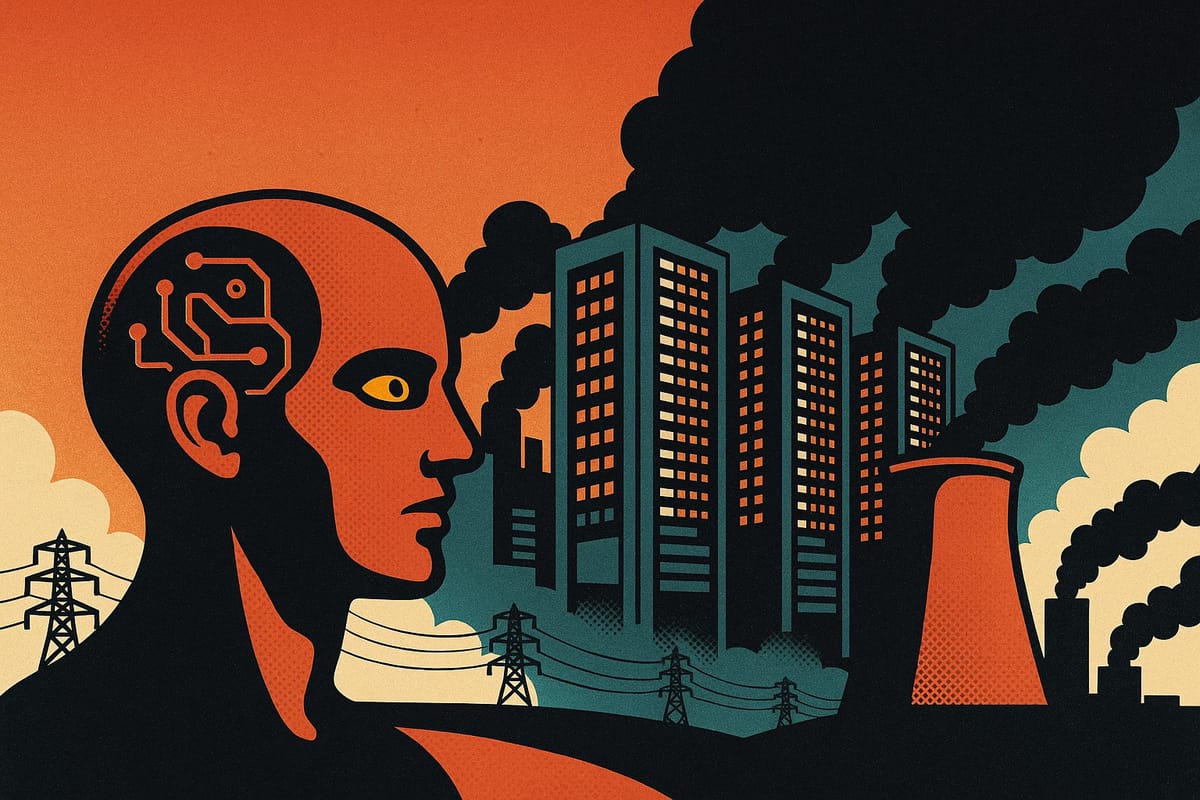
While Americans grapple with rising electricity costs, some of the world's most profitable companies are pouring unprecedented billions into power-hungry data centers that are fundamentally reshaping the nation's energy landscape—and sticking consumers with the tab.
Amazon, Meta, Microsoft, and Google are collectively spending over $300 billion annually on artificial intelligence infrastructure, with Amazon alone planning to invest $150 billion over 15 years on data centers. Meta has increased its data center budget from $28 billion last year to $70 billion in 2025, while simultaneously reporting record quarterly profits of $20.84 billion in Q4 2024—a 49% increase from the previous year.
Yet as these tech titans rake in unprecedented profits, ordinary Americans are facing electricity bill increases of up to 36% in some states, with data centers identified as a primary driver of these surging costs.
The impact on consumer wallets is already being felt across the country. Between May 2024 and May 2025, the nationwide average residential electricity price jumped from 16.41 cents to 17.47 cents per kilowatt-hour—a 6.5% increase that energy analysts directly link to data center demand. Some states saw far more dramatic spikes:
In the PJM Interconnection grid, which serves 67 million people across 13 states from Illinois to Washington D.C., capacity prices skyrocketed from $30 to $270 per megawatt-day—a shocking 800% increase. According to the grid's independent market monitor, data centers accounted for over 60% of this price increase, representing $9.4 billion in additional costs that started hitting consumer bills this month.
The math is stark: in Trenton, New Jersey, average monthly bills rose by $26. In Columbus, Ohio, they climbed $27. ComEd customers in Chicago saw their electricity prices jump 45% this summer compared to last year, with the average customer paying an extra $11 per month through May 2025.
What makes this situation particularly egregious is how the costs are structured. When tech companies build massive data centers, they often don't cover the full cost of the electrical infrastructure needed to serve them. Instead, utilities invest in new transmission lines, substations, and grid upgrades—then pass these costs along to all customers through higher rates.
A recent analysis by Wood Mackenzie found that in most cases, utilities either socialize infrastructure costs to other ratepayers or absorb them entirely, essentially forcing consumers to subsidize Big Tech's expansion. As one energy researcher put it: "That's a massive transfer of cost. The question is: who's going to pay it?"
The answer is clear: everyday Americans are footing the bill while tech companies enjoy the profits.
Consider Virginia's situation, home to the world's largest concentration of data centers in "Data Center Alley." These facilities already consume about 5,050 megawatts of power—equivalent to the electricity needs of 2 million households, or roughly 60% of all homes in the state. A December 2024 Virginia General Assembly report predicts that locals could see $14-$37 increases in their monthly bills by 2040, even before accounting for inflation.
The scale of Big Tech's data center investments is staggering:
Amazon's Massive Expansion:
Meta's AI Infrastructure Bet:
Microsoft and Google:
These companies are making these investments while posting record profits. Meta's 2024 revenue hit $164.5 billion, while Amazon's AWS division crossed $100 billion in annual revenue for the first time. Meanwhile, 23% of Americans couldn't pay part or all of their utility bills in 2024, according to a LendingTree survey.
The numbers behind data center energy consumption are mind-boggling. The Department of Energy estimates that data center electricity usage will double or triple by 2028, potentially representing 6.7% to 12% of total U.S. electricity consumption. A single AI data center can consume as much electricity as 80,000 U.S. households.
To put this in perspective, training just one generative AI model uses the same amount of energy as 100 average U.S. homes consume over an entire year. An AI search on ChatGPT uses over 10 times the power of a standard Google search.
The International Energy Agency projects that data centers will consume nearly half of all new electricity supply added to the U.S. grid over the next five years. Yet the costs of building this infrastructure are being socialized across all utility customers.
Perhaps most troubling is how utilities and tech companies are working together in ways that could undermine necessary reforms. Utilities make money by building infrastructure—data centers provide the perfect excuse to spend billions on new transmission lines and substations. This creates a powerful alliance between utilities eager to expand their rate base and tech companies seeking subsidized infrastructure.
As energy policy experts warn, this dynamic threatens to entrench fossil fuel infrastructure and derail utility reforms that could benefit consumers. Many of the data centers coming online are being powered by aging fossil fuel plants rather than clean energy sources, despite tech companies' public commitments to sustainability.
The current regulatory framework essentially allows profitable corporations to privatize the benefits of AI infrastructure while socializing the costs. Tech companies get faster, more powerful services that generate billions in revenue, while consumers—many already struggling with inflation—bear the burden through higher utility bills they had no say in approving.
Some states are beginning to push back. Pennsylvania sued PJM over the capacity price increases, Maryland passed emergency legislation, and New Jersey's governor demanded the resignation of PJM's CEO. But these are reactive measures to a problem that should have been addressed proactively.
Several regulatory solutions could rebalance this equation:
The AI revolution is being built on the backs of American consumers who are forced to subsidize some of the world's most profitable companies. While Amazon reports near-$100 billion in cloud revenue and Meta posts record profits exceeding $20 billion per quarter, ordinary families are seeing their electricity bills rise by double-digit percentages.
This represents one of the largest wealth transfers in recent history—from working families to tech billionaires—all facilitated by a utility system designed to socialize costs while privatizing profits. Without significant regulatory reform, the situation will only worsen as data center demand is projected to continue exploding through the decade.
Americans deserve better than being forced to bankroll Big Tech's AI ambitions through their utility bills. It's time for policymakers to ensure that the companies profiting from this infrastructure boom pay their fair share, rather than shifting costs to consumers who are already struggling with the rising cost of living.
The digital future may be inevitable, but there's nothing inevitable about making ordinary Americans pay for it while tech giants keep all the profits.