
The Hateful 8
How Eight Democratic Senators Betrayed Their Party and the American People

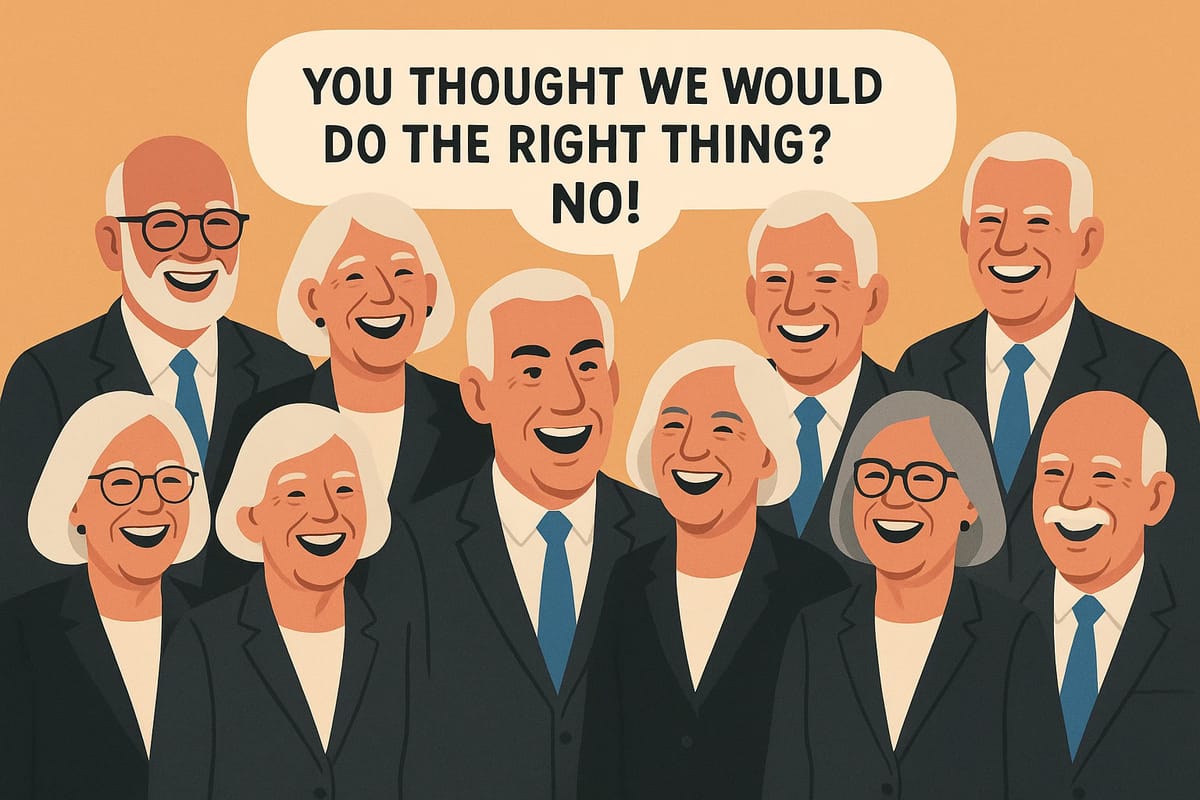
After 40 days of what became the longest government shutdown in U.S. history, eight Democratic senators made a decision that will live in infamy within their party. On November 9, 2025, these senators broke ranks with their Democratic colleagues to vote with Republicans on a procedural measure that paved the way to end the shutdown—without securing the party’s key demand for guaranteed extension of Affordable Care Act premium tax credits.
Their decision was immediately labeled a “betrayal” and “pathetic” by prominent voices in the Democratic Party, with Senator Bernie Sanders calling it “a very, very bad vote.” But who are these eight senators, and why did they choose to abandon their party’s unified stance at such a crucial moment?
The eight senators who voted to advance the Republican shutdown deal represent a mix of retiring lawmakers and political opportunists who prioritized personal convenience over progressive principles:
The retiring Senate Democratic Whip shocked colleagues by breaking with Minority Leader Chuck Schumer. Durbin, who holds the No. 2 position in Democratic leadership, claimed the shutdown had caused “too much pain for the American people,” effectively undermining his own party’s negotiating position.
The former Virginia governor was “one of the last Democrats to join the group willing to vote to advance the bill,” checking over legislation with his staff as late as Sunday evening. His late conversion suggests political calculation rather than principled decision-making.
The retiring senator “often took the lead in negotiating the compromise legislation” and had made extending ACA subsidies a priority, yet settled for a mere “pledge” from Republican Majority Leader John Thune to hold a future vote. This represents a complete capitulation on her stated priorities.
Hassan claimed she had been “hearing from residents both affected by looming spikes in health care costs and by people affected by the government shutdown,” yet chose to abandon millions who would face those very health care cost spikes.
Despite growing “increasingly irate as the shutdown wore on,” she ultimately caved to Republican pressure, prioritizing Nevada’s tourism industry over national Democratic priorities.
Rosen claimed Republicans were “weaponizing their power in alarming ways to inflict unimaginable pain and suffering on working people,” yet rewarded this very behavior with her vote.
Fetterman has been “breaking with his party as he does on many other issues” and “criticized Democrats for using the shutdown to demand concessions on health care.” His consistent contrarianism raises questions about his commitment to Democratic values.
The independent who caucuses with Democrats had been “voting since the outset to reopen the government” and admitted that “standing up to Donald Trump didn’t work.” This defeatist attitude emboldened Republican intransigence.
The compromise these eight senators accepted was a stunning betrayal of everything Democrats had fought for during the shutdown. The deal includes only a “mini package of appropriations bills” and “a stopgap funding measure that will ensure the full government remains open until at least Jan. 30, 2026.” Most egregiously, the legislation “would keep the government funded through Jan. 30, without extending ACA funds slated to expire.”
What did Democrats get in return for abandoning their core demand? Merely “a promise by Senate Majority Leader John Thune to vote on an ACA funding bill by the end of the second week of December. But there’s no guarantee that will achieve the 60 votes necessary to pass.” This is political theater at its worst—trading concrete policy wins for vague promises that may never materialize.
In a revealing moment that exposed the hollowness of Republican promises, “all 53 Senate Republicans voted Monday against including a simple one-year extension of the ACA funds” in the funding bill. The eight Democratic defectors chose to ignore this clear signal of Republican bad faith.
This capitulation represents more than just a tactical error—it reflects a fundamental weakness in Democratic strategy that emboldens Republican extremism. For 40 days, “Democratic senators had voted 14 times not to reopen the government as they demanded the extension of tax credits that make coverage more affordable under the ACA.” The party had maintained remarkable unity in the face of intense pressure.
Then these eight senators broke, handing Republicans exactly what they wanted: government reopening without any meaningful concessions on healthcare. The procedural vote passed 60-40, giving Republicans the exact margin they needed to advance their agenda.
While these senators justified their betrayal by citing the pain of the shutdown, they ignored the far greater pain their capitulation would cause. The shutdown “disrupted federal operations, threatened food assistance programs, triggered thousands of flight cancellations, and left hundreds of thousands of federal workers without pay.” These were indeed serious consequences.
But by abandoning the fight for ACA subsidies, these senators condemned millions of Americans to face skyrocketing health insurance premiums. The temporary pain of a shutdown pales in comparison to the permanent financial devastation families will face when they can no longer afford basic healthcare coverage.
According to health policy experts, families could see their insurance premiums increase by hundreds or even thousands of dollars per year without the ACA tax credits. For middle-class families already struggling with inflation, this represents a crushing blow that could force them to choose between healthcare and other basic necessities.
Perhaps most tellingly, “none of the lawmakers who voted to advance the deal will face voters in 2026: Six are not up for election, and two are retiring.” This pattern reveals the self-serving nature of their decision. Freed from electoral accountability, these senators chose the path of least resistance rather than fighting for the principles they were elected to defend.
Republican House Speaker Mike Johnson praised them, saying they “decided to put principle over their personal politics.” When Republicans are praising your principled stand, you know you’ve betrayed your party’s values.
This isn’t the first time some of these senators have abandoned Democratic priorities when it mattered most:
Independent Senator Angus King admitted in a Monday MSNBC interview that the shutdown gave Trump “more power” and that “standing up to Donald Trump didn’t work.” This defeatist attitude is exactly what emboldens authoritarian behavior. By rewarding Trump’s shutdown tactics with complete capitulation, these eight senators have ensured he will use the same strategy again and again.
The timing makes this betrayal even more inexcusable. As political analyst Niall Stanage noted, “the critics within the Democratic Party note that the party won a number of significant elections just last Tuesday. They believe they had the upper hand and they have been effectively sold out by these eight.”
Democrats had momentum. They had public opinion on their side. Polls consistently showed Americans blamed Republicans for the shutdown. Yet these eight senators chose to snatch defeat from the jaws of victory.
The impact of this betrayal is already being felt:
House Minority Leader Hakeem Jeffries declared that House Democrats are “focused on dealing with the bill that’s coming over from the Senate to the House, and we’re going to fight hard to defeat it,” adding that “the fight lives on.” This shows the stark contrast between real Democratic leadership and the capitulation of these eight senators.
While the Hateful 8 chose surrender, other Democratic leaders continue to fight:
The Democratic Party must learn from this betrayal and ensure it never happens again. This means:
This betrayal echoes some of the darkest moments in Democratic history, when the party failed to stand firm on principle:
In each case, Democrats told themselves they were being “pragmatic” or “realistic.” In reality, they were abandoning their core values and the people who elected them to fight for change.
The American people deserve leaders who will fight for their healthcare, not politicians who fold at the first sign of pressure. The Hateful 8 have shown their true colors, and progressive voters will not forget this betrayal. Their legacy will be one of cowardice in the face of Republican extremism, choosing personal comfort over the welfare of millions of Americans who desperately need affordable healthcare.
In the end, these eight senators didn’t just vote to end a shutdown—they voted to abandon the fight for healthcare justice when it mattered most. They chose temporary relief over lasting change. They chose Republican talking points over Democratic values. They chose surrender over struggle.
That is a betrayal that will echo through American politics for years to come.
Democrats Who Voted YES (The Hateful 8):
All Republicans Except Rand Paul (KY): YES
All Other Democrats: NO
The final House vote on this compromise legislation is expected as early as Wednesday, November 12, 2025. The fight for healthcare affordability continues, despite the capitulation of these eight Democratic senators.