
The Government Shutdown
Who Is to Blame?

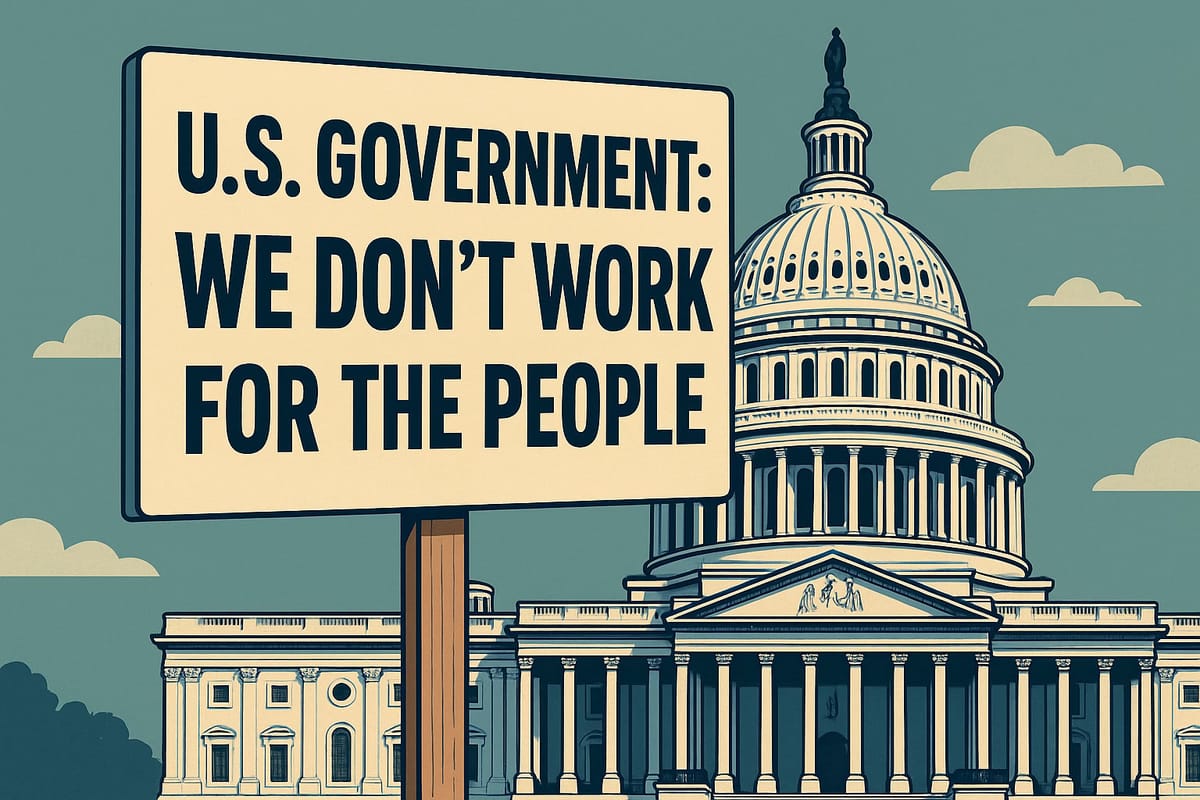
A Comprehensive Analysis of Political Responsibility and Accountability
Government shutdowns have become an increasingly common feature of American politics, transforming from rare occurrences into what many consider routine political weapons. As of November 2025, the United States is experiencing its second-longest government shutdown in history, which began on October 1 and has now stretched over 33 days. The central question that emerges whenever the federal government ceases non-essential operations is not just about the immediate impacts, but about political responsibility: who bears the blame for these costly disruptions to government services?
The current shutdown, like its predecessors, has sparked intense partisan finger-pointing, with Republicans and Democrats each claiming the other party is responsible for the impasse. Understanding the complex dynamics of blame in government shutdowns requires examining both the constitutional mechanics of government funding and the political calculations that drive these standoffs.
The U.S. Constitution grants Congress the exclusive power to appropriate federal funds, making it the ultimate gatekeeper of government spending. Article I, Section 9 states that “No Money shall be drawn from the Treasury, but in Consequence of Appropriations made by Law.” This constitutional provision means that regardless of political dynamics, Congress bears formal responsibility for ensuring the government remains funded.
Every year, Congress must pass twelve appropriations bills covering different areas of government spending, or alternatively, a continuing resolution (CR) that maintains funding at previous levels. When neither occurs before the fiscal year begins on October 1, a shutdown becomes inevitable under current legal interpretations.
The legal requirement for shutdowns stems from the Antideficiency Act, which prohibits federal agencies from spending money without congressional authorization. While this law has existed since the 1800s, it wasn’t consistently enforced until 1980, when Attorney General Benjamin Civiletti issued an opinion requiring shutdowns during funding gaps. Since 1990, all funding gaps lasting more than a few hours have resulted in government shutdowns.
The 2025 shutdown centers on a familiar yet contentious issue: health care policy. Democrats are demanding an extension of enhanced tax credits that help millions of Americans afford health insurance through the Affordable Care Act marketplace. These subsidies, which were expanded during the COVID-19 pandemic, are set to expire at the end of 2025, potentially doubling insurance costs for over 20 million Americans.
Republicans, controlling both chambers of Congress and the White House, have refused to include these extensions in funding legislation, arguing that health care subsidies should be negotiated separately from government funding bills. This disagreement has created the current stalemate, with neither side willing to compromise.
Unlike previous shutdowns where federal workers were furloughed and eventually received back pay, the Trump administration has indicated it may permanently dismiss federal employees rather than temporarily furlough them. This unprecedented escalation has raised the stakes significantly, potentially affecting hundreds of thousands of federal workers and their families.
The shutdown’s impacts are already being felt across multiple sectors. National parks have reduced services, environmental and food safety inspections have been suspended, and federal courts are operating with limited funding. Most critically, SNAP benefits for millions of low-income Americans ran out of funding on November 1, creating a food security crisis that affects vulnerable populations nationwide.
Historical analysis reveals consistent patterns in how Americans assign blame for government shutdowns. The party making additional policy demands—rather than accepting a “clean” funding bill—typically bears greater public responsibility. This pattern held true during the 1995-1996 shutdown when Republicans demanded spending cuts, the 2013 shutdown over Obamacare implementation, and the 2018-2019 shutdown over border wall funding.
In each of these cases, pre-shutdown polling showed Americans were predisposed to blame the party making demands, and those numbers typically worsened as shutdowns dragged on. The party in power also tends to face greater scrutiny, as voters often expect those with control of government to find solutions.
The current shutdown presents an unusual dynamic that challenges historical patterns. While Democrats are making the policy demands (health care subsidies), polling consistently shows that Americans support their position. Multiple surveys indicate that 70-75% of Americans, including majorities of Republicans, favor extending the health insurance tax credits that Democrats are fighting to preserve.
This public support has translated into blame patterns that favor Democrats more than in previous shutdowns where they made policy demands. Rather than being penalized for refusing a “clean” funding bill, Democrats appear to be benefiting from public agreement with their policy goals.
Recent polling provides clear insights into how Americans are assigning responsibility for the current shutdown. Multiple surveys conducted in October 2025 show consistent results:
These numbers represent a significant shift from pre-shutdown polling, which showed Democrats facing a 7-11 point deficit in potential blame. The reversal suggests that the shutdown’s actual impacts and the underlying policy dispute have influenced public opinion.
Unsurprisingly, partisan affiliation strongly influences blame attribution. Republicans overwhelmingly blame Democrats for refusing to pass a “clean” continuing resolution, while Democrats place responsibility on Republican leadership for refusing to address expiring health care subsidies. However, the crucial swing group—independent voters—appears to be siding more with Democrats in this particular shutdown.
Republican leaders have struggled to convince the public that Democrats bear primary responsibility. House Speaker Mike Johnson has dismissed polls showing GOP blame, claiming that Americans understand Democrats are at fault. However, these assertions contradict multiple independent surveys from different polling organizations.
Democrats appear to be employing a calculated strategy based on several factors. First, they believe they have public opinion on their side regarding health care subsidies. Second, as the minority party, they have less to lose politically from a prolonged shutdown. Third, they view health care as a winning issue that helped them in previous elections, particularly the 2018 midterms.
Democratic leaders like Chuck Schumer and Hakeem Jeffries have framed their position as protecting millions of Americans from losing affordable health insurance. This messaging strategy allows them to claim they’re fighting for ordinary Americans rather than engaging in political gamesmanship.
Republicans face a more complex political calculation. As the party in power, they bear greater responsibility for governing and finding solutions. Their opposition to health care subsidies stems from philosophical objections to government spending and desire to address these issues through comprehensive health care reform rather than temporary extensions.
However, Republican leadership recognizes that prolonged shutdowns typically damage the governing party more than the opposition. The challenge is that conceding on health care subsidies would anger their conservative base, while maintaining the shutdown risks broader public backlash.
Government shutdowns impose significant economic costs on the American economy. Goldman Sachs estimates that each week of the current shutdown reduces annualized GDP growth by 0.15 percentage points, with JPMorgan providing similar estimates. The economic damage includes lost productivity from furloughed workers, delayed government payments, and reduced consumer confidence.
The threat of permanent federal job losses, rather than temporary furloughs, adds an unprecedented dimension to the economic impact. If the Trump administration follows through on dismissing federal workers, it could affect up to 100,000 jobs according to some analysts, potentially adding stress to labor markets already showing signs of weakness.
Beyond economic statistics, shutdowns create real hardship for millions of Americans. Federal workers face financial uncertainty, with many unable to pay bills or mortgages. During the 2018-2019 shutdown, federal employees turned to food banks and emergency assistance programs to survive.
The current shutdown’s impact on SNAP benefits represents perhaps the most severe consequence. With food assistance suspended for millions of low-income Americans, families face immediate food insecurity. This has prompted legal challenges and emergency state responses, but cannot fully replace federal nutrition assistance programs.
The increasing frequency of government shutdowns reflects a broader breakdown in normal legislative processes. Since 1997, Congress has only once passed all appropriations bills before the fiscal year deadline. The routine use of continuing resolutions and shutdown threats has replaced regular order budgeting, creating governance by crisis.
This pattern undermines effective government planning and administration. Federal agencies cannot make long-term commitments or investments when funding remains uncertain. The constant threat of shutdowns affects government recruitment, retention, and morale, ultimately degrading public service quality.
Frequent shutdowns also raise questions about democratic accountability and representation. When government shutdowns become routine political tools, elected officials may prioritize political advantage over public service. The disconnect between public disapproval of shutdowns and their continued use suggests that electoral accountability mechanisms may be insufficient to prevent this behavior.
Moreover, shutdowns disproportionately impact vulnerable populations who depend on government services, while imposing fewer costs on wealthy Americans who can afford private alternatives. This dynamic raises equity concerns about using shutdowns as political leverage.
Government shutdowns are largely unique to the American political system. Most other democracies have parliamentary systems where government formation depends on maintaining legislative confidence, making shutdowns virtually impossible. In countries with similar separation of powers, such as Brazil or the Philippines, different institutional arrangements typically prevent funding gaps from shutting down government operations.
International observers often view American shutdowns as evidence of political dysfunction and institutional failure. During shutdowns, the United States loses credibility in international negotiations and provides authoritarian leaders with propaganda points about democratic instability. The current shutdown’s length and severity particularly damage America’s international standing and leadership role.
Various reform proposals aim to prevent future shutdowns by changing the underlying legal framework. One proposal would establish automatic continuing resolutions that maintain government funding at previous levels if Congress fails to pass new appropriations by the deadline. This would remove the shutdown threat while preserving Congressional authority over spending.
However, critics argue that automatic funding would reduce Congressional incentives to complete appropriations bills on time, potentially institutionalizing continuing resolution governance rather than encouraging regular order budgeting.
Other reform proposals focus on changing Congressional procedures to make shutdowns less likely. These include biennial budgeting, which would give Congress two years to complete appropriations; automatic pay reductions for members of Congress during shutdowns; and requirements that Congress remain in session until appropriations are completed.
Some reformers propose eliminating the debt ceiling, which creates similar crisis dynamics around government borrowing authority. By removing artificial deadlines that create shutdown risks, these reforms aim to restore normal legislative processes and reduce crisis governance.
The question of who bears blame for government shutdowns cannot be answered simply or definitively. While formal constitutional responsibility lies with Congress, political responsibility is more complex and contextual. In the current shutdown, polling suggests that Americans assign greater blame to Republicans and President Trump, largely because they control the levers of government and because Democrats’ policy demands enjoy broad public support.
However, focusing solely on immediate blame obscures deeper institutional problems that enable shutdowns to occur. Both parties have used shutdown threats when it served their political interests, normalizing what should be an extraordinary failure of governance. The increasing frequency and length of shutdowns reflect a broader breakdown in American political institutions and norms.
Ultimately, the American people bear the costs of these political standoffs through disrupted services, economic damage, and degraded trust in government. Whether Republicans or Democrats bear greater responsibility for individual shutdowns matters less than the systemic changes needed to prevent them from recurring.
The 2025 shutdown may prove to be a watershed moment, given its unprecedented length and the threat of permanent federal job losses. If it ends soon with both parties claiming victory, the pattern of crisis governance will likely continue. But if the human and economic costs become severe enough, it may finally force the institutional reforms necessary to prevent future shutdowns.
The blame for government shutdowns ultimately lies not with any single party or politician, but with a political system that incentivizes brinksmanship over governance, and with voters who continue to elect officials who employ these destructive tactics. Until Americans demand and reward cooperative governance over partisan combat, the cycle of shutdowns and blame will continue, regardless of which party controls Washington.
This analysis is based on current events as of November 3rd, 2025 and reflects ongoing political developments that may continue to evolve.