
Do Tariffs Raise Consumer Prices?
A Comprehensive Analysis of Economic Evidence and Systematic Impact

A Comprehensive Analysis of Economic Evidence and Systematic Impact
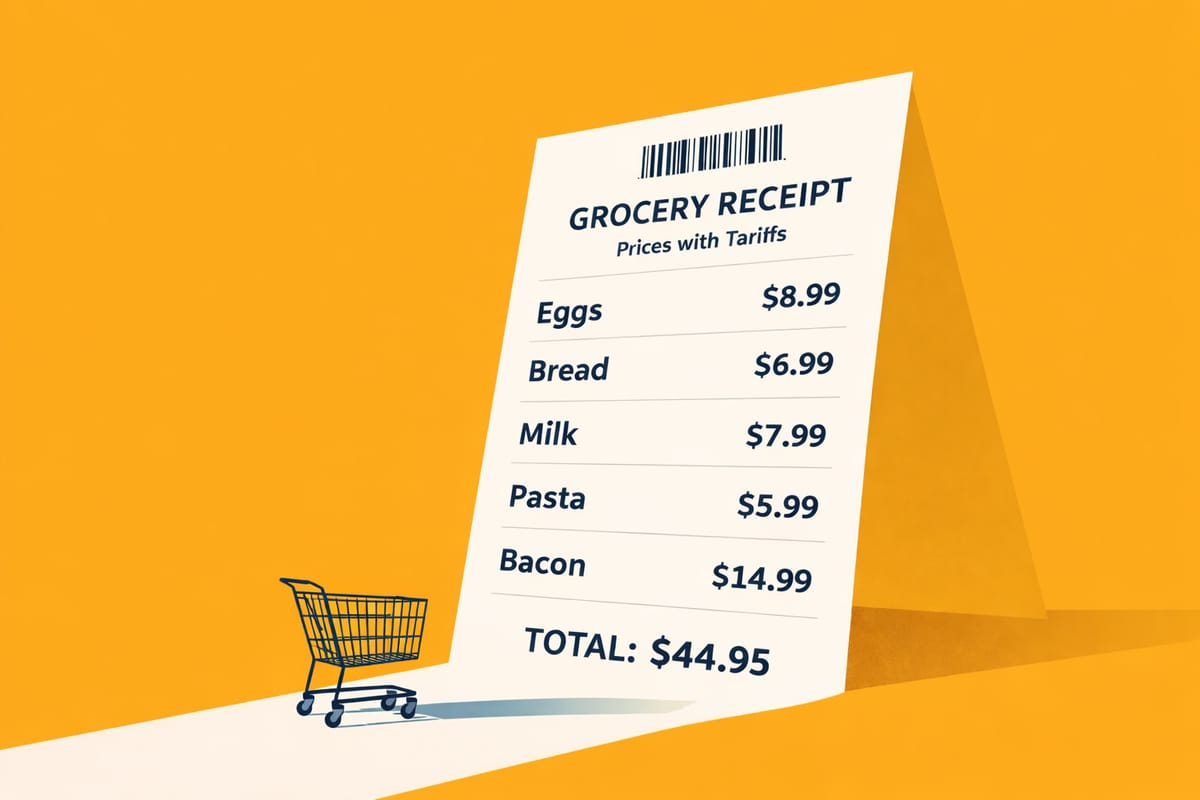
The question of whether tariffs raise consumer prices has become critically relevant as the United States experiences its most significant shift toward protectionist trade policy since the Great Depression. Current tariff policies represent a fundamental departure from decades of trade liberalization, with effective tariff rates reaching levels not seen since 1928. This systematic examination evaluates the extensive empirical evidence, economic mechanisms, and distributional consequences of tariffs on American consumers, revealing a consistent pattern of cost transfer that contradicts political narratives about foreign countries “paying” for trade protection.
The 2025 tariff regime has created what economists describe as a natural experiment in trade policy effects on consumer prices. By April 2025, the United States had implemented tariffs covering approximately 23% of total imports, raising the average effective tariff rate from around 3% to over 13%—and potentially higher depending on legal challenges to specific measures. This represents the largest increase in American trade barriers in nearly a century, providing unprecedented real-time data on how tariffs affect consumer welfare in a modern economy.
Federal Reserve research tracking tariff impacts through the Personal Consumption Expenditures (PCE) price index demonstrates measurable upward pressure on consumer prices beginning in early 2025. The Federal Reserve Bank of St. Louis analysis reveals that tariffs account for approximately 0.5 percentage points of headline PCE annualized inflation and around 0.4 percentage points of core PCE inflation during the June-August 2025 period. These effects align precisely with the timing of tariff implementations, providing compelling evidence of causation rather than correlation.
Harvard Business School research tracking real-time prices across major retailers confirms this pattern with granular data. Professor Alberto Cavallo’s analysis shows imported goods prices rose 4.0% above pre-2025 trend by early August, while domestic goods increased 2.0% above trend. When compared to pre-tariff deflationary trends observed in 2024, the impact becomes more pronounced—imported goods became 6.6% more expensive, while domestic goods cost 3.8% more. This differential pricing effect demonstrates how tariffs not only raise prices for directly affected imports but create spillover effects throughout the domestic economy.
Understanding tariff price transmission requires examining the economic mechanisms through which import duties translate into higher consumer costs. Tariffs function as border taxes paid by importing companies when goods enter the United States, creating immediate cost pressures that flow through supply chains to final consumers. The process operates through several interconnected channels that amplify the initial tariff burden.
The most direct mechanism occurs when importers face higher costs for foreign goods due to tariff duties. Economic theory predicts these costs will be passed through to consumers unless foreign exporters reduce their pre-tariff prices to absorb the burden—a scenario that extensive research shows rarely occurs in practice. Analysis of the 2018-2019 trade war found complete pass-through of tariffs to domestic prices, meaning American consumers and businesses bore the full burden of trade protection rather than foreign suppliers.
Contemporary data from 2025 confirms this pattern continues. Federal Reserve analysis using local projection regression models shows that tariff increases translate into consumer price increases at rates approaching 100% pass-through within months of implementation. This near-complete transmission reflects the reality that foreign suppliers typically lack sufficient market flexibility to absorb substantial tariff costs, particularly when tariffs are applied broadly across multiple countries and product categories.
The indirect mechanisms prove equally significant in raising consumer costs. When tariffs target intermediate goods used in domestic production—such as steel, aluminum, or electronic components—they create cascading effects throughout the economy. A tariff on steel raises costs not only for imported steel products but for all domestically manufactured goods containing steel, including automobiles, appliances, construction materials, and industrial equipment. This multiplier effect means that even goods labeled “Made in America” become more expensive when they incorporate imported inputs subject to tariffs.
Competition dynamics further amplify tariff effects on consumer prices. When tariffs reduce foreign competition in specific markets, domestic producers gain pricing power and often raise their own prices despite not being directly subject to tariff costs. Federal Reserve research documents this “competitive response” effect, showing that domestic goods prices in tariff-affected categories rise alongside import prices as companies exploit reduced competitive pressure from foreign suppliers.
The 2018-2019 U.S.-China trade war provides the most comprehensive empirical evidence available on how tariffs affect consumer prices in a modern economy. This period saw the United States impose tariffs on approximately $283 billion of imports while facing retaliatory tariffs on $121 billion of exports, creating what economists describe as the first large-scale reciprocal trade war since the 1930s.
Research published in the Journal of Economic Perspectives by economists Mary Amiti, Stephen Redding, and David Weinstein documented complete pass-through of tariffs to domestic prices during this period. Their analysis showed that tariff-inclusive import prices rose by amounts equivalent to the full tariff rate, while foreign export prices remained essentially unchanged. This finding directly contradicts claims that foreign countries absorbed tariff costs through price reductions, instead demonstrating that the “full incidence of the tariffs has fallen on domestic consumers and importers.”
The welfare effects proved substantial, with estimates suggesting that tariffs cost American consumers and importing firms an additional $3 billion per month in direct tax costs plus $1.4 billion per month in deadweight welfare losses by the end of 2018. These deadweight losses represent pure economic inefficiency—costs imposed on the economy without corresponding benefits to any domestic group—arising from reduced trade volumes and misallocation of resources toward less efficient domestic production.
Subsequent research by Pablo Fajgelbaum and Amit Khandelwal, reviewing data through 2021, concluded that “US consumers of imported goods have borne the brunt of the tariffs through higher prices, and that the trade war has lowered aggregate real income in both the US and China.” Their analysis found no evidence that the trade war generated net economic benefits for the United States, instead documenting persistent income losses for American consumers and businesses.
The Federal Reserve Board’s analysis of manufacturing sector impacts during this period revealed that tariff effects extended well beyond direct price increases. The research found that while some domestic industries initially gained from reduced foreign competition, these benefits were offset by higher input costs from tariffs on intermediate goods and retaliatory tariffs affecting export markets. The net result showed no measurable improvement in overall manufacturing sector performance despite substantial protection from foreign competition.
Current research tracking 2024-2025 tariff effects provides unprecedented real-time evidence of price transmission mechanisms. Multiple independent research institutions using different methodologies have converged on similar findings regarding the magnitude and timing of tariff-induced price increases.
The Yale Budget Lab’s comprehensive analysis estimates that all 2025 tariffs combined raise consumer prices by 2.3% in the short run, equivalent to an average per-household consumer loss of $3,800 annually. This represents a substantial burden on American families, with lower-income households bearing disproportionate costs due to their higher reliance on traded goods and limited ability to substitute toward more expensive domestic alternatives.
J.P. Morgan’s analysis suggests that tariff measures could boost Personal Consumption Expenditures prices by 1-1.5% in 2025, with inflationary effects concentrated in the middle quarters of the year. This timing aligns with the implementation schedule of major tariff increases, providing additional evidence of causal relationships between trade policy and consumer prices.
Real-time price tracking by Harvard’s Alberto Cavallo demonstrates that tariff effects appear within days of policy announcements and continue building over subsequent months. This rapid transmission contradicts arguments that price effects might be delayed or absorbed through other economic adjustments. Instead, the data shows prompt and persistent price increases that align with economic theory predictions about tariff pass-through mechanisms.
Bank of America’s economic research estimates that tariffs add approximately half a percentage point to the core PCE inflation measure used by the Federal Reserve for monetary policy decisions. This contribution represents a significant portion of inflation above the Federal Reserve’s 2% target, potentially influencing interest rate decisions and broader macroeconomic policy responses.
Tariffs function as regressive taxes that impose disproportionate burdens on lower-income households, creating systematic inequities in how trade policy costs are distributed across American society. This regressive effect occurs through multiple channels that reflect fundamental differences in consumption patterns and financial flexibility across income levels.
Lower-income households spend larger portions of their income on basic goods that are heavily traded internationally, including clothing, electronics, and household items. Research using Consumer Expenditure Survey data shows that the bottom income decile faces tariff burdens representing approximately 4% of disposable income, while the top decile experiences burdens of only 1.6% of income. This 2.5-to-1 ratio demonstrates the systematic inequity inherent in using tariffs as policy tools.
Yale Budget Lab analysis reveals that annual tariff costs for households in the second income decile average $1,700 under comprehensive 2025 tariff policies, compared to $8,100 for households in the top income decile. While higher-income households pay more in absolute terms, the relative burden creates substantially greater hardship for families with limited financial resources and minimal ability to adjust consumption patterns in response to price increases.
The regressive impact extends beyond simple expenditure patterns to encompass differential access to substitution opportunities. Wealthy households can more easily switch to higher-quality domestic alternatives when imported goods become expensive, while lower-income families often lack this flexibility and must either pay higher prices or reduce consumption. This dynamic means that tariffs not only impose higher relative costs on poor families but also reduce their access to goods that improve living standards.
Specific product categories reveal particularly stark distributional impacts. Tariffs on clothing and textiles, which disproportionately affect low-income households, show some of the largest price increases under current policies. Yale Budget Lab analysis indicates that apparel prices rise 17% under comprehensive tariff scenarios, representing a substantial burden for families that already dedicate large budget shares to basic clothing needs.
Research by the Center for Economic Policy Research estimates conservative annual tariff burdens of approximately $95 for the poorest households, $190 for middle-income families, and $500 for the richest households. These seemingly modest absolute amounts translate into significant relative burdens when viewed as percentages of available income, particularly for families already struggling with housing costs, healthcare expenses, and other essential needs.
Economic theory provides clear frameworks for understanding why tariffs consistently raise consumer prices rather than improving domestic welfare. The standard analysis demonstrates that tariffs create deadweight losses—pure efficiency costs imposed on society without corresponding benefits—while transferring income from consumers to protected producers and government coffers.
The optimal tariff theory, which suggests that large countries might benefit from strategically imposed trade barriers, requires highly restrictive assumptions that rarely hold in practice. These theoretical benefits depend on the ability to influence world prices through monopoly power in international markets, absence of retaliation from trading partners, and precise policy calibration that proves extremely difficult to achieve. Contemporary research finds little empirical support for optimal tariff benefits even under favorable theoretical conditions.
International comparisons reinforce evidence of tariff costs for consumers. European Central Bank research on euro area trade policy effects documents similar patterns of price transmission and welfare losses when countries implement protectionist measures. Cross-country studies consistently show that tariffs reduce consumer welfare and economic efficiency regardless of the specific institutional contexts in which they are implemented.
Historical analysis spanning nearly a century of American trade policy reveals that deadweight losses from tariffs reached approximately 1% of GDP during high-protection periods following the Civil War before declining to less than 0.1% of GDP by the 1960s. This historical perspective demonstrates that even when tariffs were more economically significant relative to overall trade volumes, they imposed substantial costs on American consumers without generating corresponding economic benefits.
The terms-of-trade effects that theoretically might benefit large countries prove limited in practice during contemporary tariff episodes. Federal Reserve analysis of recent tariff policies finds little evidence that foreign suppliers reduced their export prices to absorb tariff costs, contradicting theoretical scenarios in which domestic consumers might be partially shielded from tariff burdens through international price adjustments.
Modern global supply chains amplify tariff effects on consumer prices through complex networks of international production and distribution relationships. Unlike historical periods when trade primarily involved finished goods moving between countries, contemporary commerce relies heavily on intermediate goods that cross borders multiple times during production processes.
When tariffs target intermediate inputs, they create cascading cost increases throughout supply networks. A semiconductor tariff affects not only computer prices but also automobiles, appliances, industrial equipment, and numerous other products incorporating electronic components. This multiplier effect means that targeted tariffs often have broader economic impacts than their direct coverage would suggest.
Supply chain adjustments to tariff policies create additional costs that ultimately reach consumers through higher prices. When companies must find new suppliers, relocate production facilities, or modify logistics networks in response to trade barriers, these transition costs represent real resource expenditures that get reflected in final goods pricing. Research on supply chain effects during the 2018-2019 trade war found substantial disruption costs that persisted long after initial tariff implementations.
The dynamic nature of supply chain responses means that tariff effects on consumer prices can intensify over time rather than remaining constant. As companies exhaust inventory accumulated before tariff implementation and complete adjustments to new sourcing patterns, price increases may accelerate months after policy changes. Federal Reserve tracking of current tariff effects documents this pattern, with pass-through rates increasing as economic actors complete their adjustment processes.
International production networks also create indirect channels through which tariffs raise domestic costs. When American companies use imported intermediate goods in export production, tariffs reduce their competitiveness in foreign markets, potentially forcing them to reduce domestic operations and raise prices for remaining production. These feedback effects demonstrate how tariffs can harm domestic industries even when they are ostensibly designed to provide protection.
Tariff-induced inflation creates significant challenges for monetary policy authorities tasked with maintaining price stability. The Federal Reserve’s 2% inflation target becomes more difficult to achieve when trade policy systematically raises consumer prices, potentially forcing interest rate adjustments that affect overall economic activity.
Current tariff policies contribute an estimated 0.4-0.5 percentage points to core inflation measures, representing a substantial portion of inflation above the Federal Reserve’s target. This contribution may influence monetary policy decisions, potentially leading to higher interest rates that could slow economic growth and employment gains. Such policy interactions demonstrate how trade protection can impose macroeconomic costs that extend well beyond direct price effects.
The timing and persistence of tariff effects complicate monetary policy responses. Unlike temporary supply shocks that central banks might accommodate through temporary policy adjustments, tariffs represent persistent structural changes to import costs that require more fundamental economic adjustments. This persistence means that tariff-induced inflation may prove more challenging to address through conventional monetary policy tools.
Research on historical tariff episodes suggests that trade protection can create deflationary pressures through reduced economic activity and increased uncertainty, potentially offsetting some inflationary effects. However, contemporary analysis of current policies finds that direct price effects dominate these indirect channels, resulting in net inflationary pressure that central banks must address through tighter monetary policy.
Different economic sectors experience varying degrees of tariff impact on consumer prices, reflecting differences in import dependence, market structure, and substitution possibilities. Understanding these sectoral variations provides insight into how trade policy affects different segments of the American economy.
The electronics sector demonstrates particularly clear tariff pass-through effects due to high import dependence and limited domestic production capacity. Yale Budget Lab analysis shows electronics prices rising 10% overall under comprehensive tariff scenarios, reflecting both direct effects on imported products and indirect effects on domestic goods incorporating foreign components. Consumer electronics, computers, and telecommunications equipment show especially large price increases as tariffs affect both finished products and critical intermediate inputs like semiconductors and displays.
Automotive sector impacts illustrate how modern production networks amplify tariff effects. Even vehicles assembled in the United States incorporate substantial foreign content in the form of engines, transmissions, electronic systems, and basic materials like steel and aluminum. Research estimates that automotive prices rise 6% under current tariff policies, translating to approximately $2,900 in additional costs for a typical vehicle purchase. These effects occur regardless of where final assembly takes place, demonstrating how integrated global production makes geographic protection largely irrelevant.
Clothing and textile markets show among the largest price increases due to limited domestic production capacity and high import dependence. Comprehensive tariff scenarios generate apparel price increases of 17% in the short run, settling to 27% higher prices in the long run as supply chain adjustments occur. These effects disproportionately affect lower-income consumers who dedicate larger budget shares to clothing purchases.
Food and agricultural products face complex tariff effects that vary significantly by product category and import dependence. Fresh produce, seafood, and processed foods with high import content show substantial price increases, while products with strong domestic production capacity experience smaller effects. However, even domestically produced foods can become more expensive when they rely on imported inputs such as fertilizers, machinery, or packaging materials subject to tariffs.
Construction materials and housing costs reflect tariff effects on steel, aluminum, lumber, and other building inputs. The National Association of Home Builders estimates that $14 billion worth of home-building goods came from overseas in 2024, representing 7% of total construction materials. Tariffs on these inputs raise housing construction costs, ultimately translating into higher home prices and rental costs that affect all Americans regardless of their direct exposure to imported goods.
Persistent tariff policies create long-term economic adjustments that extend beyond immediate price effects to encompass structural changes in production, employment, and investment patterns. These adjustments reveal how trade protection influences economic development trajectories and industrial competitiveness over extended periods.
When tariffs provide sustained protection for domestic industries, they can induce shifts in production capacity and employment patterns. However, research on recent tariff episodes finds limited evidence of meaningful industrial regeneration despite substantial price protection. Federal Reserve analysis of the 2018-2019 period showed no measurable improvement in overall manufacturing sector performance, suggesting that modern global production networks limit the effectiveness of geographic protection strategies.
Investment effects from tariff policies prove particularly complex, as protection can both encourage and discourage capital formation depending on specific industry characteristics. While protected industries might increase investment in domestic production capacity, industries dependent on imported inputs face higher costs that reduce their investment attractiveness. Net investment effects typically prove negative because input cost increases affect more industries than receive direct protection benefits.
Labor market adjustments to tariff policies create both gains and losses that must be evaluated against overall economic costs. While protected industries might experience employment gains, these benefits come at the expense of job losses in import-dependent sectors and consumer-facing industries affected by higher costs. Research on historical trade protection episodes consistently finds that job losses in affected downstream industries typically exceed employment gains in protected upstream industries.
Innovation and productivity effects represent perhaps the most significant long-term consequences of sustained protection. When domestic industries face reduced foreign competition, they have diminished incentives to improve efficiency and develop new technologies. This dynamic can lead to persistent productivity gaps that accumulate over time, ultimately making domestic industries less competitive even with continued protection. Historical analysis of American manufacturing during high-protection periods documents this pattern of reduced innovation and efficiency gains relative to more competitive industries.
Evaluating tariff policies requires comparison with alternative approaches for addressing legitimate economic policy objectives such as supporting domestic manufacturing, generating government revenue, and responding to unfair foreign trade practices. This analysis reveals that tariffs perform poorly relative to more targeted and efficient policy instruments.
Direct subsidies for domestic production provide more efficient support for strategic industries than import protection. Unlike tariffs, which raise costs for all consumers including those who never purchase imported goods, subsidies target benefits specifically to desired industries while spreading costs across the tax base according to ability to pay. This approach avoids the regressive distributional effects inherent in tariff policies while potentially achieving similar industrial policy objectives.
Revenue generation through tariffs proves highly inefficient compared to modern tax instruments. Yale Budget Lab analysis estimates that current tariff policies generate approximately 40-46 cents of deadweight loss for every dollar of government revenue raised. This efficiency cost substantially exceeds that of income taxes, sales taxes, or other conventional revenue sources that avoid the trade distortions inherent in import duties.
Addressing unfair foreign trade practices through international institutions and targeted enforcement mechanisms provides more precise responses than broad tariff increases. Antidumping procedures, countervailing duty investigations, and World Trade Organization dispute resolution systems allow countries to respond to specific trade violations without imposing widespread costs on domestic consumers and businesses.
Exchange rate policies offer more efficient approaches for addressing overall trade imbalances than sectoral protection. When countries face persistent trade deficits reflecting macroeconomic savings and investment imbalances, currency adjustments can address root causes more effectively than trade barriers that distort specific markets while leaving underlying imbalances intact.
The persistence of tariff policies despite overwhelming economic evidence of their costs to consumers reflects political economy dynamics that favor concentrated producer interests over diffuse consumer welfare. Understanding these institutional factors helps explain why economically inefficient policies continue to attract political support.
Protected industries gain substantial benefits per firm from tariff policies, creating strong incentives for organized political advocacy. Steel producers, for example, might gain millions of dollars in additional profits from import protection, justifying significant lobbying expenditures and political campaign contributions. These concentrated benefits generate powerful political constituencies supporting continued protection regardless of overall economic effects.
Consumer costs from tariffs, while large in aggregate, are typically small per individual and spread across diverse product categories, making organized opposition difficult to sustain. Most consumers remain unaware of specific tariff costs embedded in prices they pay, reducing political pressure for policy changes even when aggregate welfare losses are substantial.
Media coverage of trade policy often emphasizes employment effects in protected industries while giving less attention to job losses and price increases affecting other sectors. This asymmetric attention reinforces political dynamics favoring protection by highlighting visible benefits while obscuring distributed costs.
International trade negotiations create additional political pressures that can favor tariff instruments even when they impose domestic costs. When countries use tariffs as bargaining chips in trade discussions, the domestic costs of protection may be viewed as acceptable prices for achieving negotiating objectives. However, this logic assumes that trade negotiations will ultimately reduce overall protection levels, an assumption that may not hold when multiple countries pursue similar strategies.
This analysis examines the comprehensive empirical evidence on tariff impacts on American consumer prices, synthesizing research from federal agencies, academic institutions, and international organizations to evaluate the systematic transmission of import duties to domestic costs. The analysis demonstrates consistent patterns of price transmission across multiple time periods, methodologies, and economic contexts, revealing tariffs as regressive taxes that impose disproportionate burdens on lower-income households while generating limited economic benefits relative to their substantial costs.